 Relentless

 Lessons built by mental performance coaches
Mental training for athletes
Relentless gives competitive athletes a short mental training session every day, built by real mental performance coaches. Learn how to handle nerves, pressure and bad days, then use it when it counts.
Available on iPhone
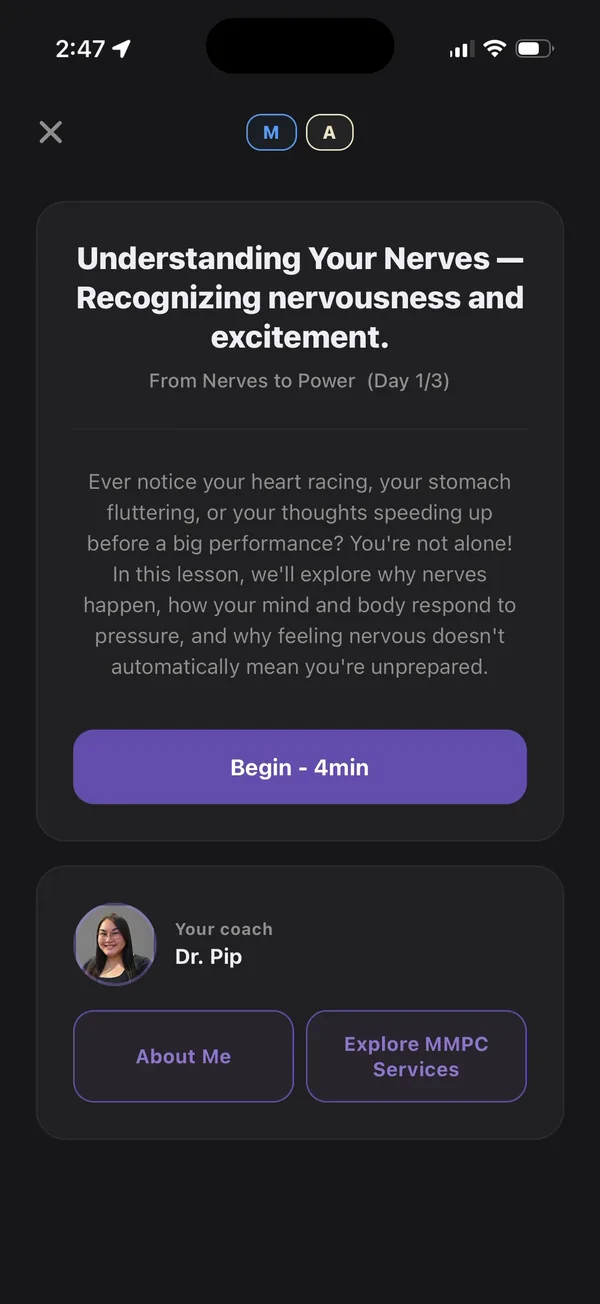
 From Nerves to PowerDr. Pip, day 1 of 3
Built with real mental performance coaches
Every program in Relentless comes from a coach who works with athletes. Pick the one that fits your sport and what you're working on.
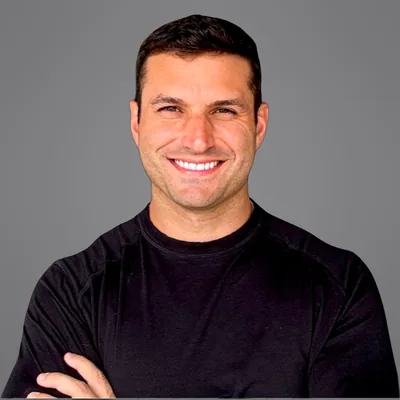
Grant Chiasson
Former Division I quarterback
30-Day Sprint
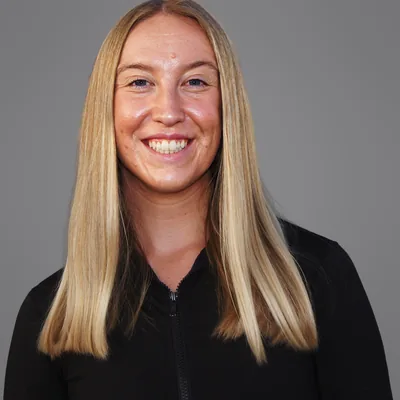
Zoe Frank
Distance running and track
Race Day Ready
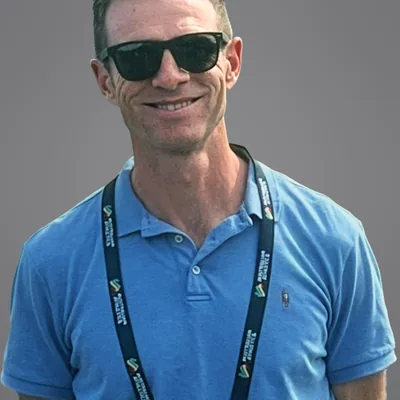
James Goodall
Masters runner, 800m to marathon
Race Ready: A 7-Day Mental Performance Challenge
Dr. Pip
Licensed Professional Counselor
From Nerves to Power
Iaia Colella
Neuroscience-based coaching
The 8 Mental Dimensions of Performance
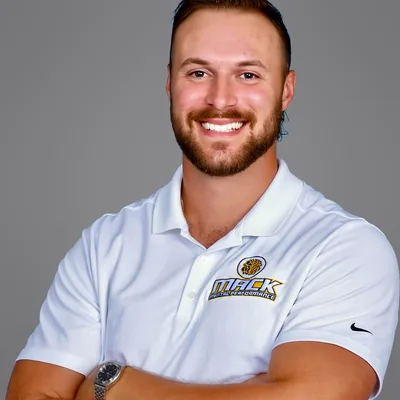
Brock McCormack
Founder, Mack Mental Performance
The Golfer’s Mental Edge: 7 Days to Stronger Performance
An app for the mental side of your sport
Relentless: Mental Toughness is an iPhone app that teaches competitive athletes mental skills through short daily lessons. Mental performance coaches build the programs. Each lesson pairs a coach's voiceover with an exercise, like a breathing drill or a reflection, so you practice the skill instead of just hearing about it.
The lessons are organized around mindfulness, acceptance and commitment, an approach from sport psychology known as MAC. Relentless App LLC launched the app in May 2026. It was co-founded by Trenton Sandler, a Division I runner at the University of Arkansas, and developer Rahul Kumar.
- What it is
- Mental training app for athletes
- Platform
- iPhone, iOS 15.1 or later
- Lesson length
- Usually 2 to 5 minutes
- Price
- $7.99 a month or $59.99 a year
- Free trial
- 3 days monthly, 7 days annual
- App Store rating
- 4.7 out of 5
- Made by
- Relentless App LLC
- Launched
- May 11, 2026
What you get with Relentless
Everything is built to fit around training. A few minutes a day is enough to build the habit.
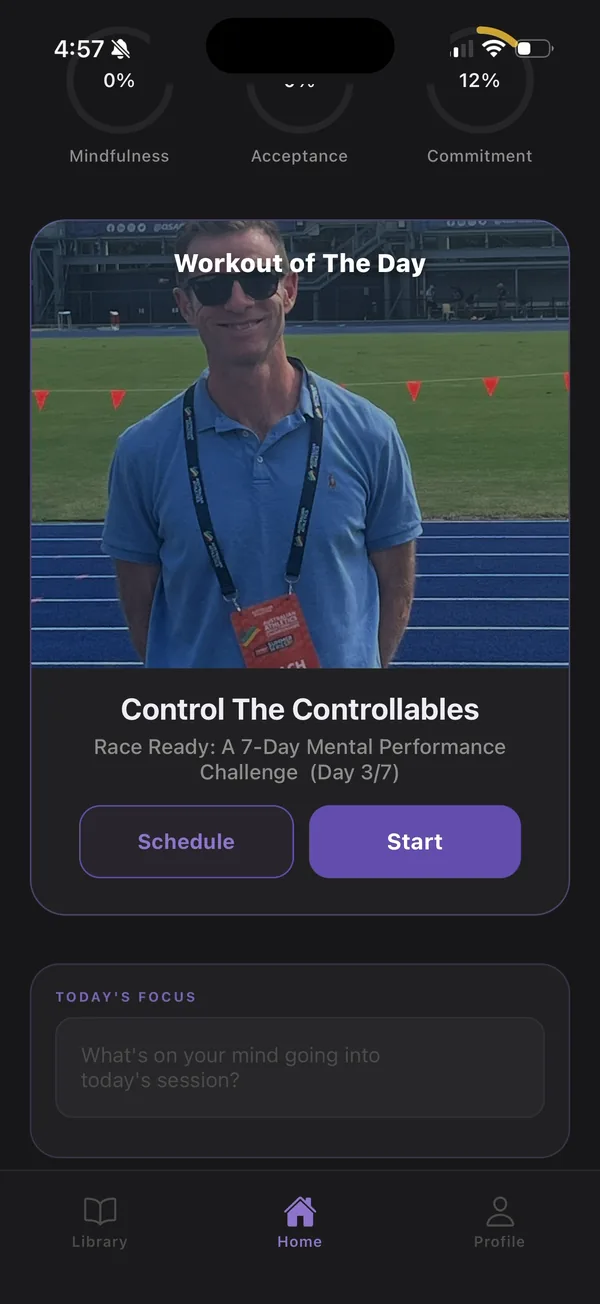
A new session every day
Pick a program and Relentless lines up your next lesson each day. Most lessons are a short voiceover from your coach, an exercise, then a quick reflection, so you practice the skill instead of just hearing about it.
- Most lessons take two to five minutes
- Start right away or schedule it for later
- A quick check-in on what's on your mind before you start
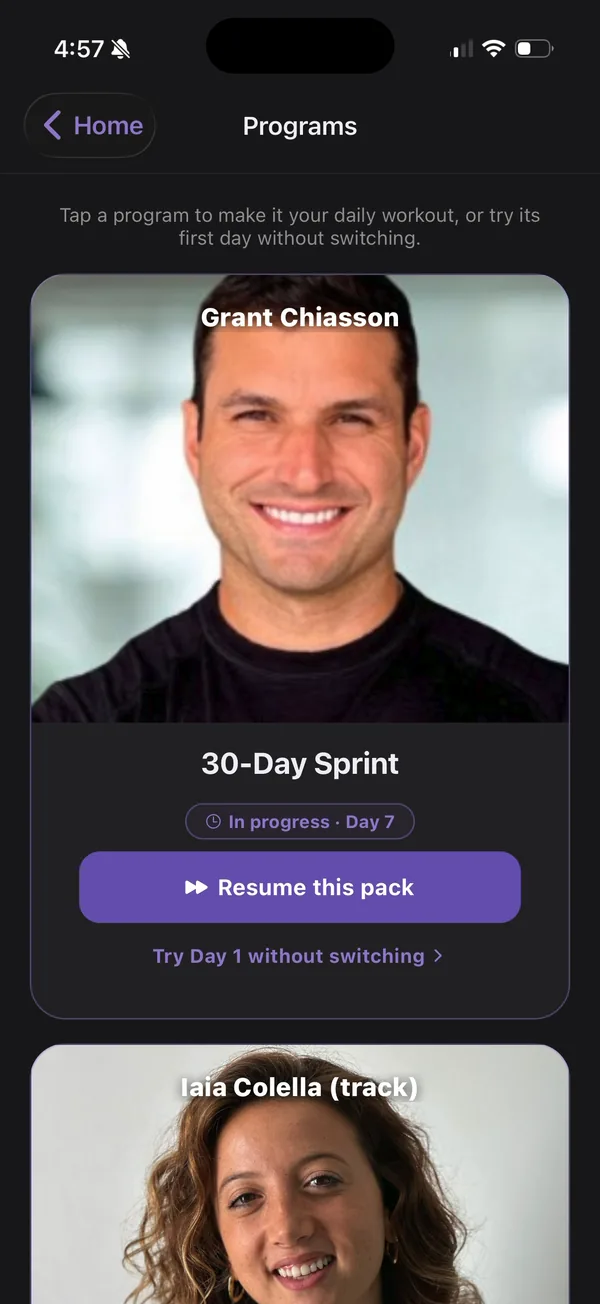
Programs from real coaches
Each program takes on one thing athletes deal with, like nerves on race day, confidence, self-talk or playing tight. Coaches build them from what they teach their own athletes.
- Programs for every sport, plus golf, track and cross country
- Try day one of another program without losing your place
- See each coach's background and how to work with them
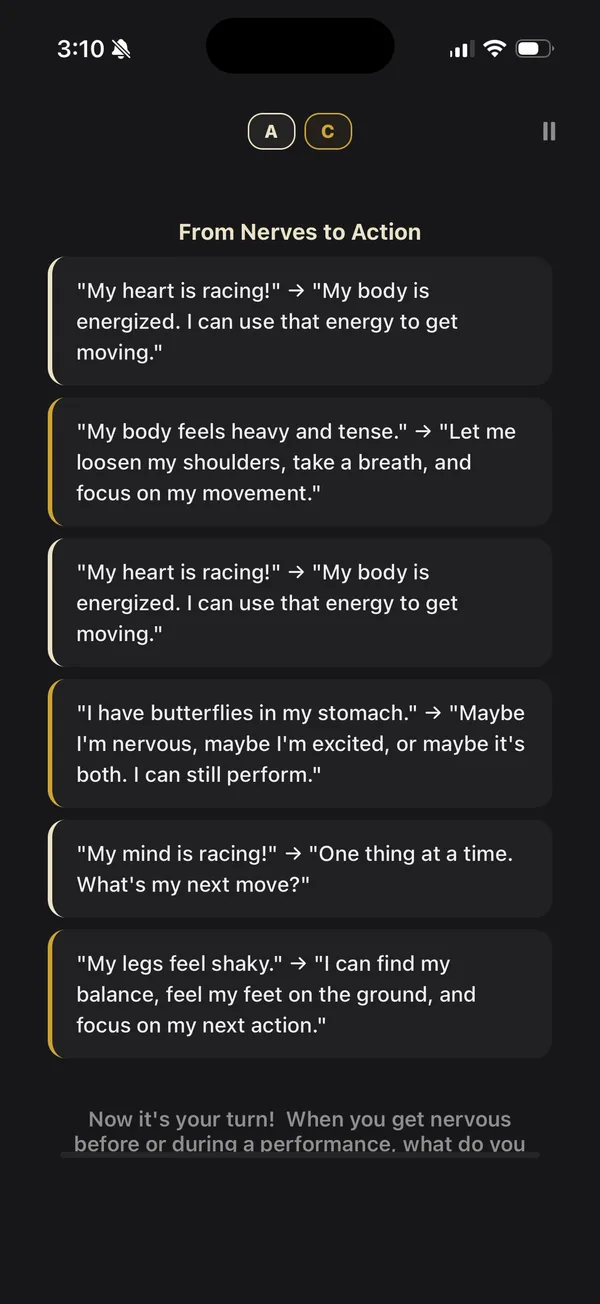
Tools for when it gets hard
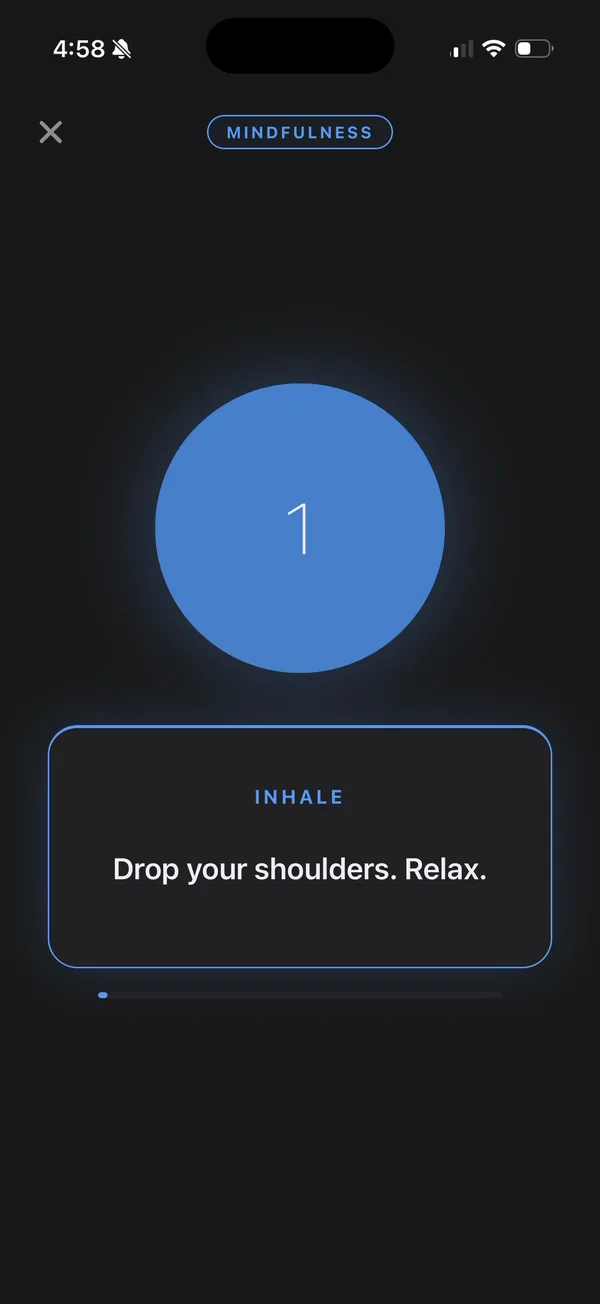
Breathing drills, reframes and focus cues you learn on an easy day, so they're ready when your heart is pounding on the start line. The library has exercises you can come back to any time, like box breathing and a body scan.
- Guided breathing with a visual count
- Reframes that turn nervous signals into action
- Library exercises for mindfulness, acceptance and commitment
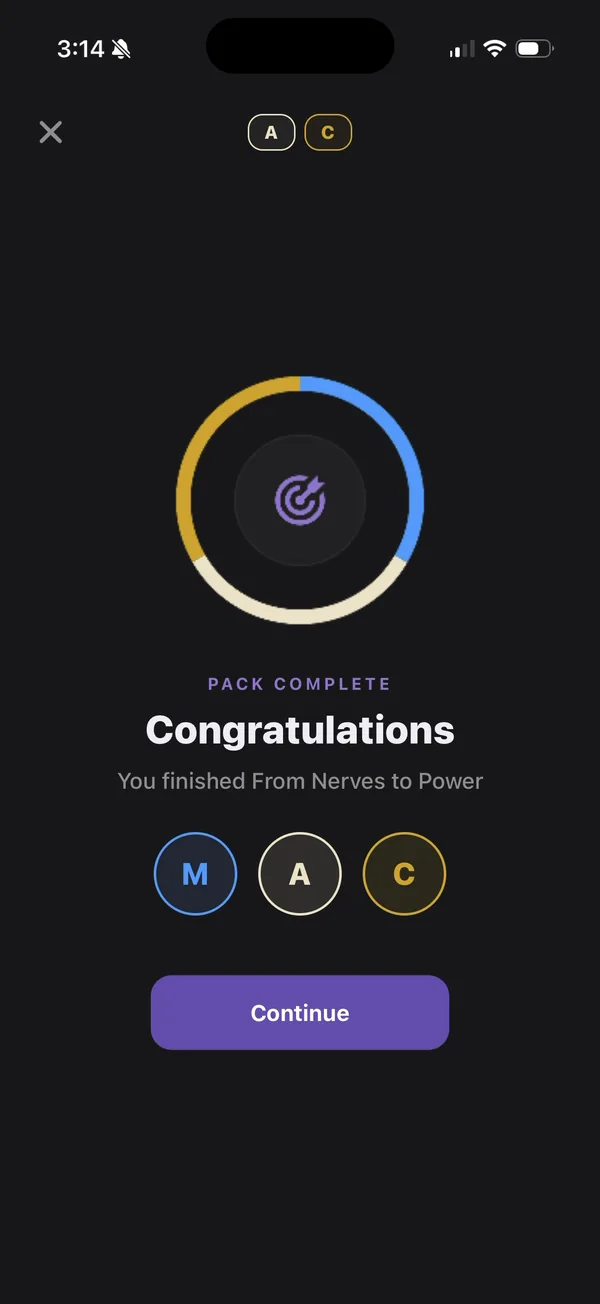
See your mental game grow
Relentless scores your mindfulness, acceptance and commitment from 0 to 100 and updates them as you finish lessons. Your journal keeps what you were thinking before and after competitions, and your profile counts down to your next one.
- Mindfulness, acceptance and commitment scores
- A journal for before and after competitions
- Streaks that show your consistency
Three steps, a few minutes a day
Tell us about your sport
Pick your sports, your goals and the date of your next competition, so the app can count down with you.
Do one short lesson a day
Listen to your coach, do the exercise and write a line in your journal. Most days it takes less than five minutes.
Use it when it counts
Bring the same breathing, self-talk and focus routines into practice and competition, where they matter.
Built on sport psychology
Relentless organizes training around the Mindfulness-Acceptance-Commitment (MAC) approach, developed by psychologists Frank Gardner and Zella Moore. Instead of trying to force nerves away, MAC teaches athletes to notice them, let them be there, and keep doing what the moment asks for.
Mindfulness
Notice what you're thinking and feeling right now, without judging it or trying to change it.
Acceptance
Let nerves and doubt be there without spiraling or fighting them.
Commitment
Put your attention on the next action that matters, whatever you're feeling.
- Elite athletes. In a randomized trial with 69 elite athletes, the MAC group improved more in sport-specific mindfulness, emotion regulation and self-rated performance than a group doing traditional mental skills training.Josefsson, T., Ivarsson, A., Gustafsson, H., Stenling, A., Lindwall, M., Tornberg, R., & Böröy, J. (2019). Effects of Mindfulness-Acceptance-Commitment (MAC) on sport-specific dispositional mindfulness, emotion regulation, and self-rated athletic performance in a multiple-sport population: An RCT study. Mindfulness, 10(8), 1518-1529.
- College athletes. In a study of 18 NCAA Division III athletes, coaches rated the MAC group's performance as better after the program than before it.Gross, M., Moore, Z. E., Gardner, F. L., Wolanin, A. T., Pess, R., & Marks, D. R. (2018). An empirical examination comparing the Mindfulness-Acceptance-Commitment approach and Psychological Skills Training for the mental health and sport performance of female student athletes. International Journal of Sport and Exercise Psychology, 16(4), 431-451.
- Mental fatigue. Cyclists who did a draining 90-minute mental task before riding to exhaustion quit about 15 percent sooner, with no real difference in heart rate. The ride just felt harder, which shows how much the mind shapes physical effort.Marcora, S. M., Staiano, W., & Manning, V. (2009). Mental fatigue impairs physical performance in humans. Journal of Applied Physiology, 106(3), 857-864.
These studies are small, and the research is still growing. We link every source so you can read it yourself.
Who's behind Relentless

“We all know how to train our bodies daily. We are all able to lift in the gym daily and do X reps, but no one knows what to do for their mind, and it really is trainable.”
Trenton Sandler, co-founder, in an interview with The Extra Mile
Trenton is a Division I middle-distance runner at the University of Arkansas. During his first two seasons of college running, he felt he had lost his competitive drive in races. He worked with a sports psychologist, kept researching on his own and found that what helped most were concrete exercises he could practice. Relentless is built on that idea.

“I've launched three mobile apps, and I handle the engineering behind Relentless so athletes have a simple, reliable way to practice mental skills every day.”
Rahul Kumar, co-founder and developer
Rahul studies computer engineering and computer science at the University of Wisconsin–Madison and competes in powerlifting. He led the end-to-end development of the Relentless iOS app, from the frontend and backend to sign-in, subscriptions, analytics, the paywall and the App Store release. He also built Remedy, a back pain app for iPhone.
Questions athletes ask
What is Relentless?
Relentless: Mental Toughness is an iPhone app that teaches competitive athletes the mental side of performance. Mental performance coaches build programs out of short lessons, and each lesson pairs the coach's voiceover with an exercise, like a breathing drill or a reflection, so you practice a skill instead of just reading about it. Relentless App LLC launched the app on the App Store in May 2026.
How much does Relentless cost?
Relentless costs $7.99 a month or $59.99 a year in the United States. Prices can be different in other countries. The app is free to download, and full access needs a subscription.
Is there a free trial?
Yes. New subscribers get a 3-day free trial on the monthly plan and a 7-day free trial on the annual plan. If you don't cancel before the trial ends, the subscription starts automatically.
Which sports is Relentless for?
Any sport where you compete. Some programs are built for every sport, and others are built for one, such as golf, track and field, or cross country. You can pick more than one sport in the app.
Who makes the lessons in Relentless?
Mental performance coaches. Each coach builds their own programs, and their name and background are in the app. Current coaches include Grant Chiasson, Zoe Frank, James Goodall, Dr. Pip, Iaia Colella and Brock McCormack. Meet the coaches.
Is Relentless therapy?
No. Relentless is mental performance training, not medical or mental health care, and it isn't meant for a crisis. If you're struggling, talk to a licensed professional. In the United States, you can call or text 988 any time to reach the Suicide and Crisis Lifeline.

Build a mind so tough, it scares people.
Start with a free trial and do your first lesson today. It takes a few minutes.